Design
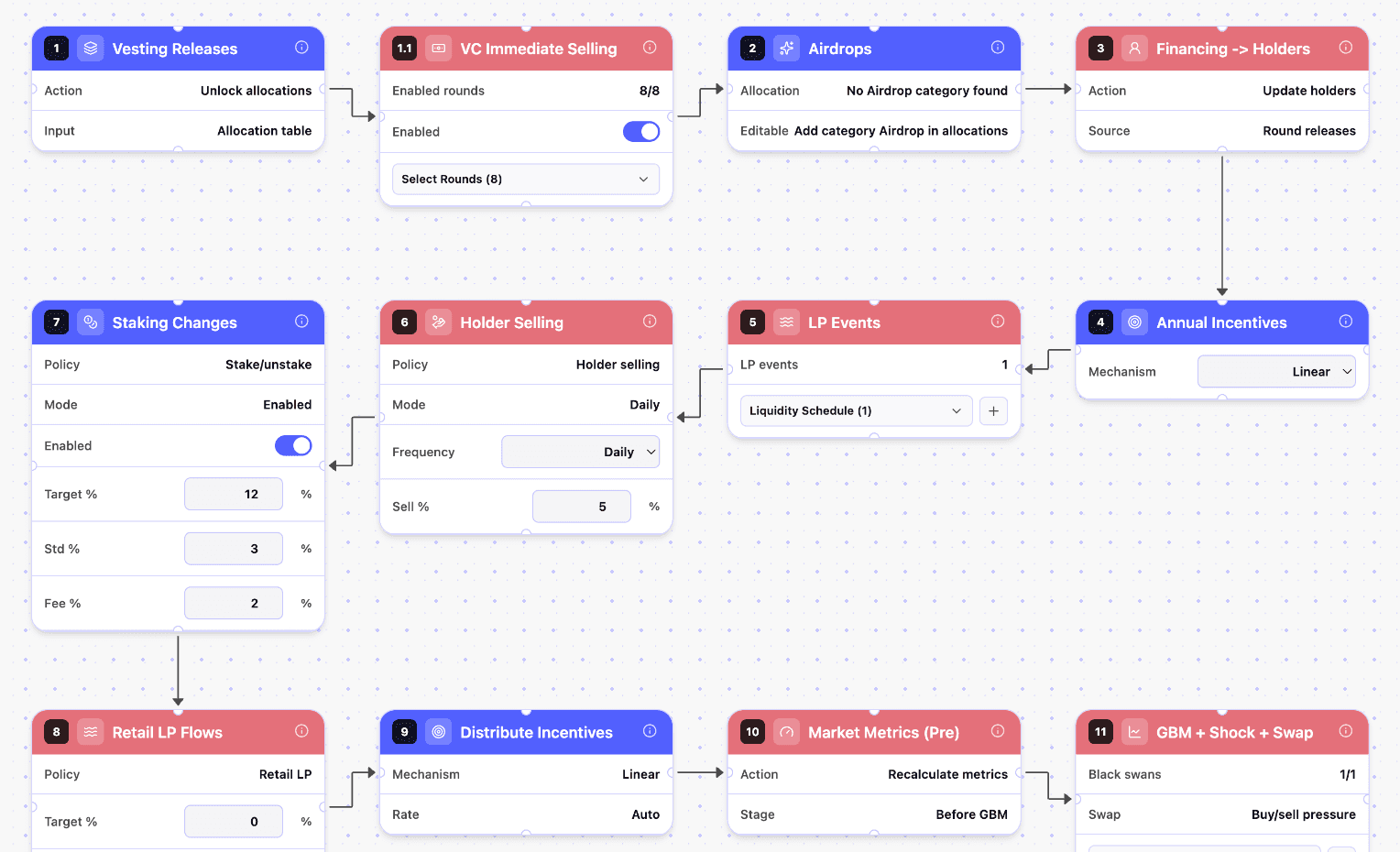
Design fully customizable token models through our conversational interface or advanced dashboard. Define supply logic, vesting schedules, emissions, incentives, governance parameters, and liquidity assumptions with complete flexibility.
A unified, chain-agnostic infrastructure layer that connects economic design to live on-chain execution.
Design fully customizable token models through our conversational interface or advanced dashboard. Define supply logic, vesting schedules, emissions, incentives, governance parameters, and liquidity assumptions with complete flexibility.

How It Works
A production-grade architecture that connects conversational design, digital twin validation, and controlled institutional execution.
Keni is the intelligent interface to the entire Kenomic stack. It designs fully customized token economies, interprets simulation results, identifies structural vulnerabilities, and orchestrates deployment, all through natural conversation. From initial concept to live execution, every step can be configured, validated, and launched conversationally.
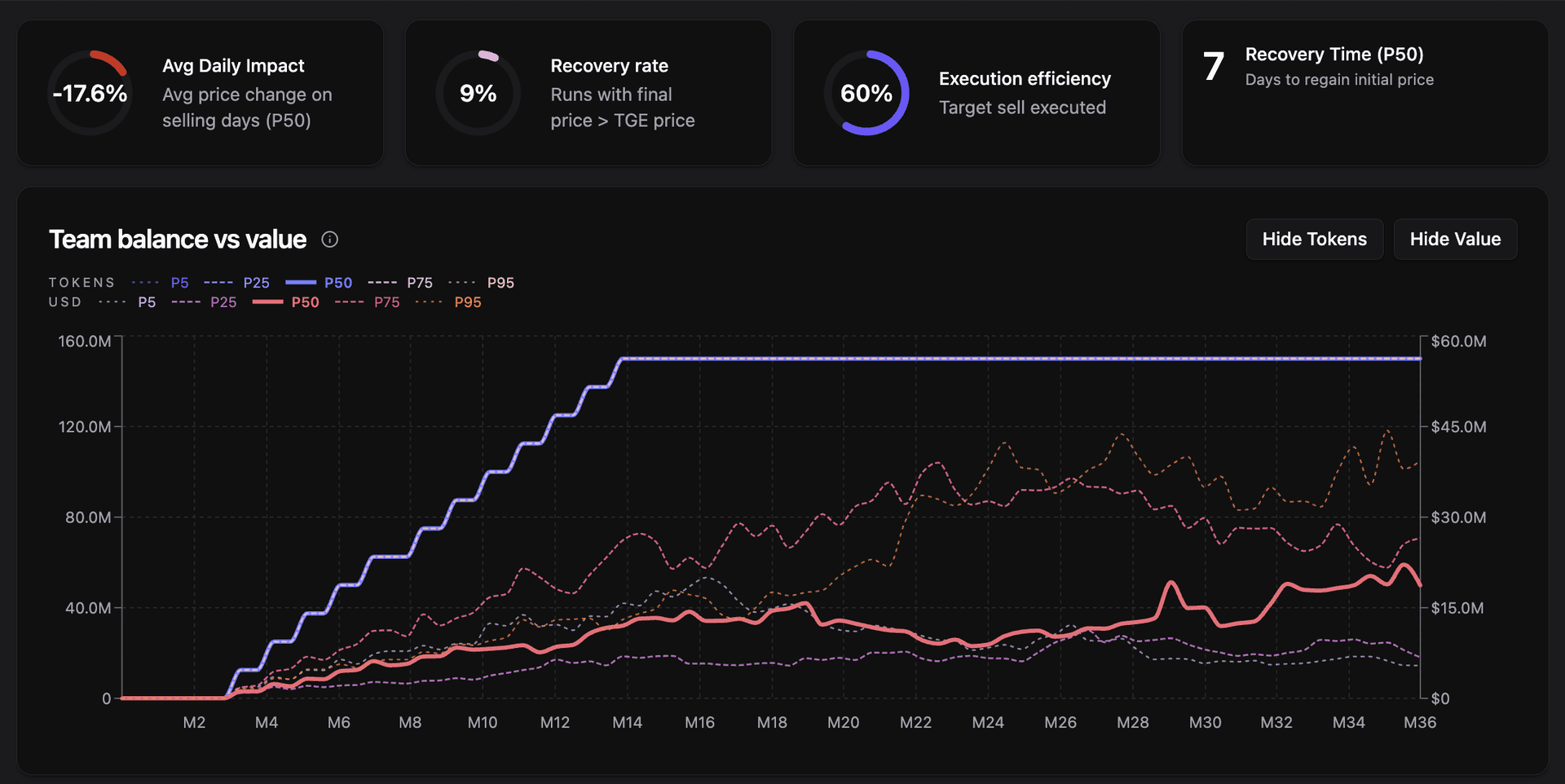
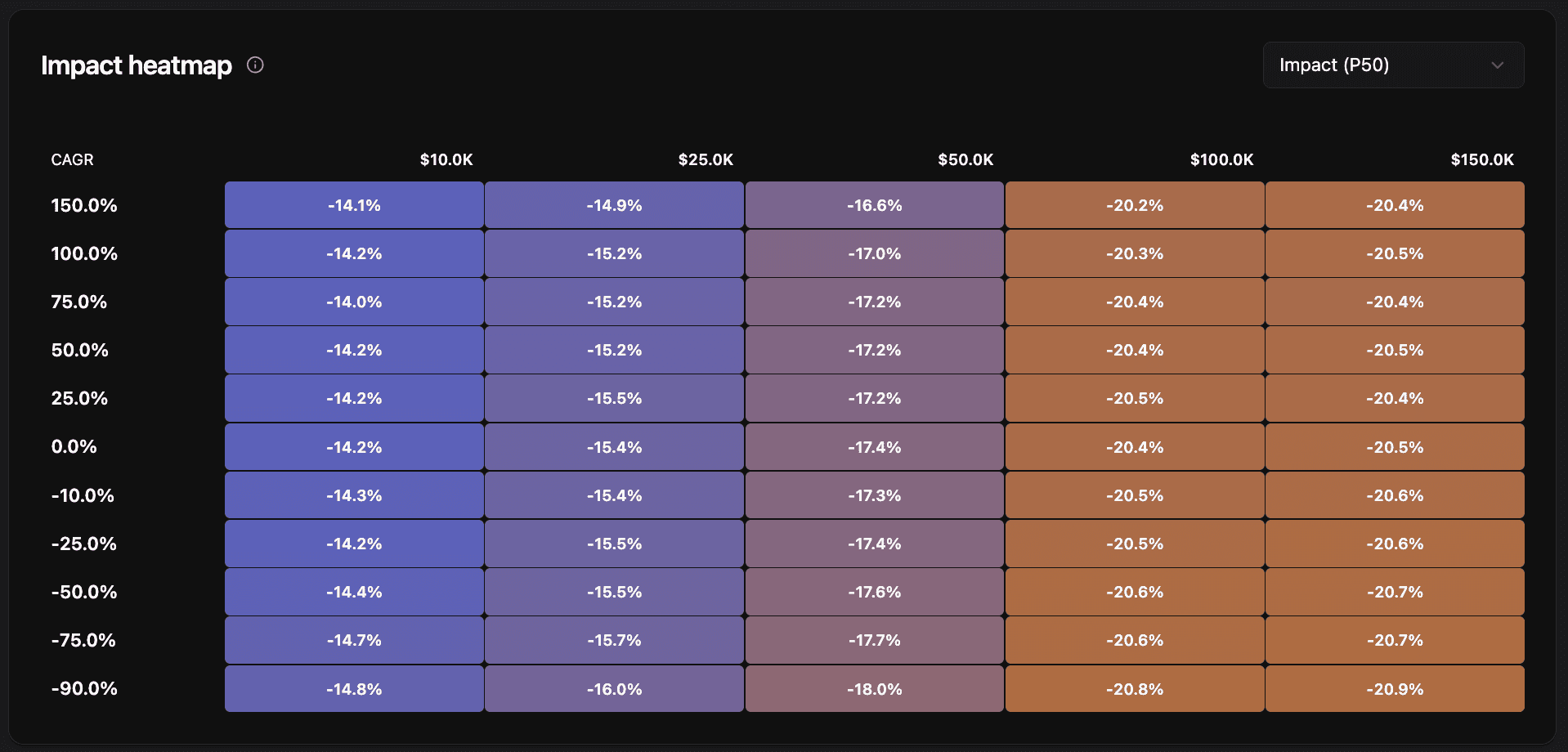
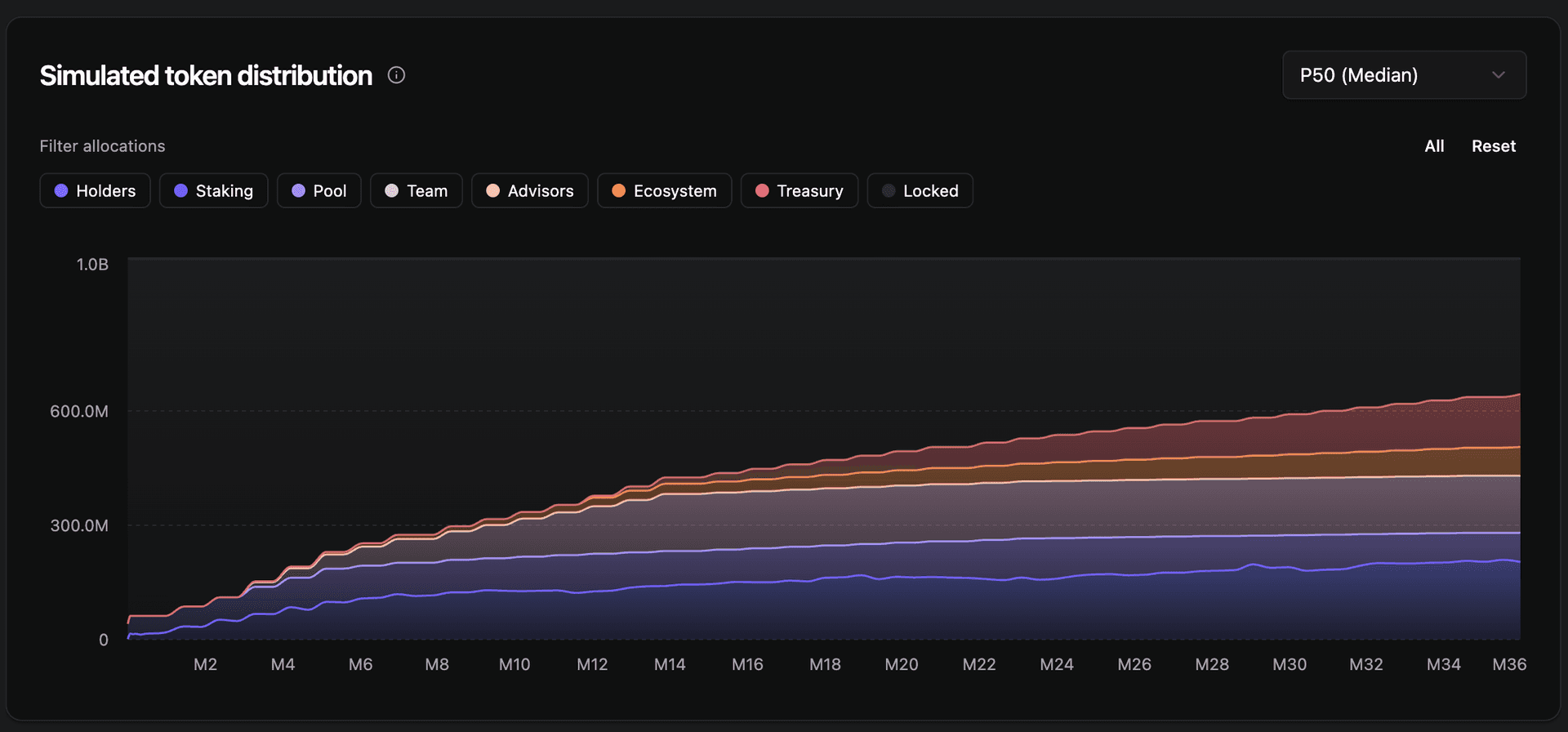
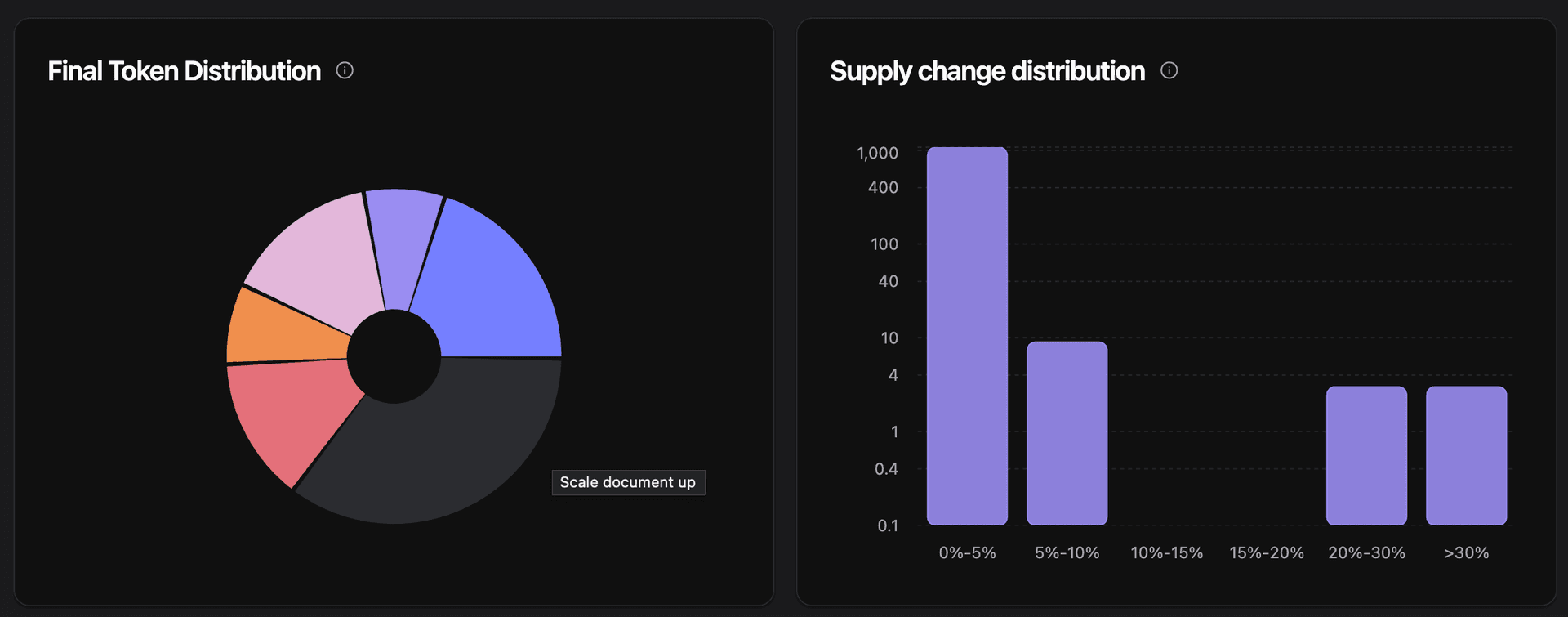
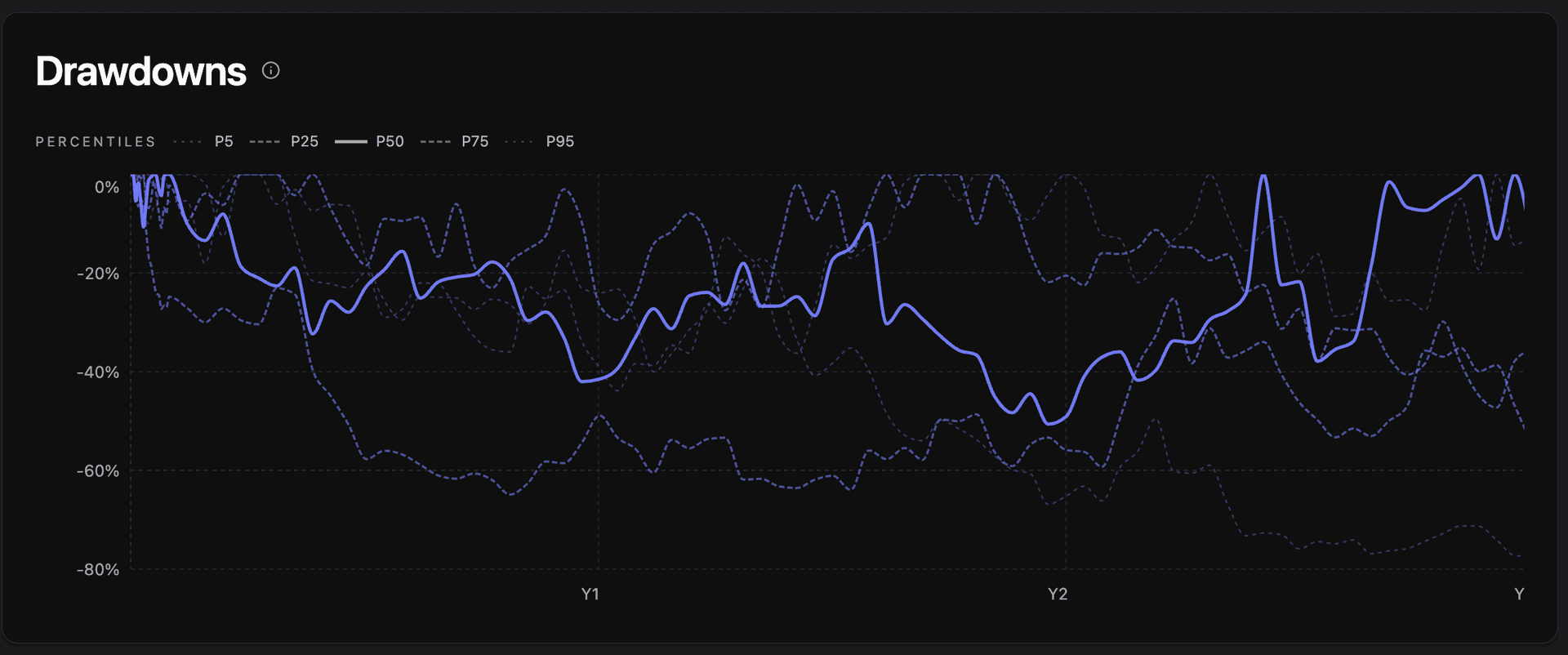
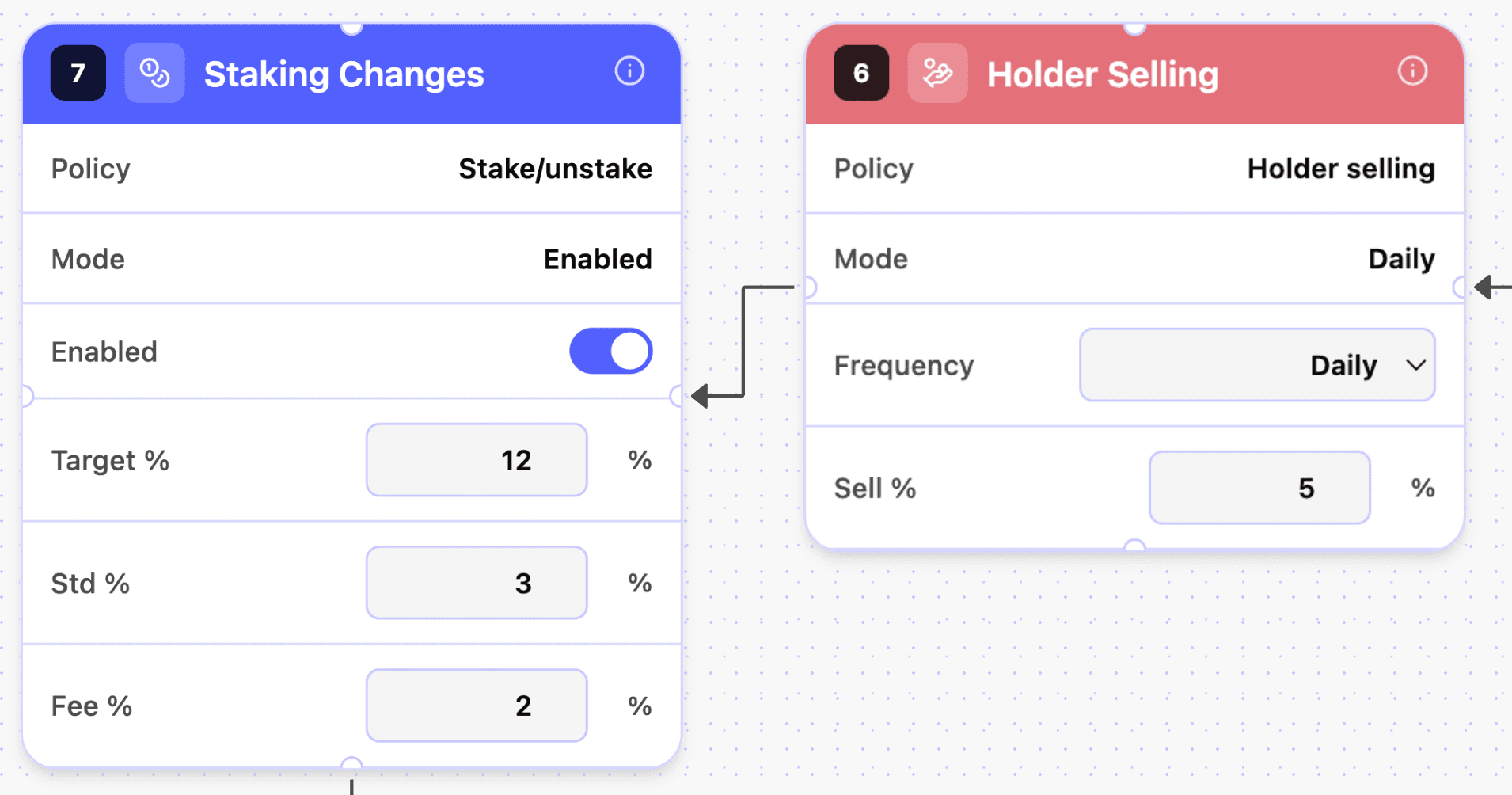
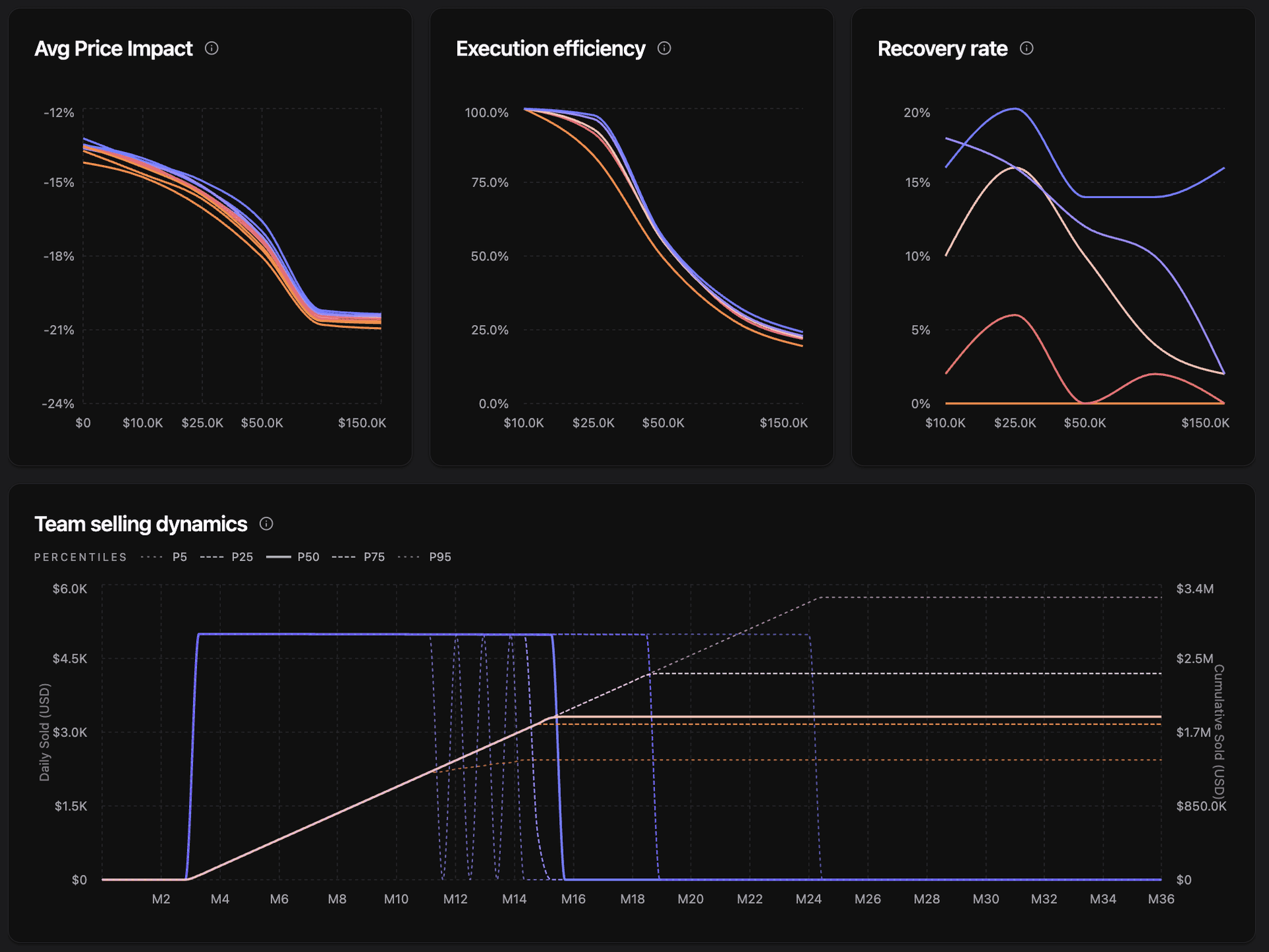
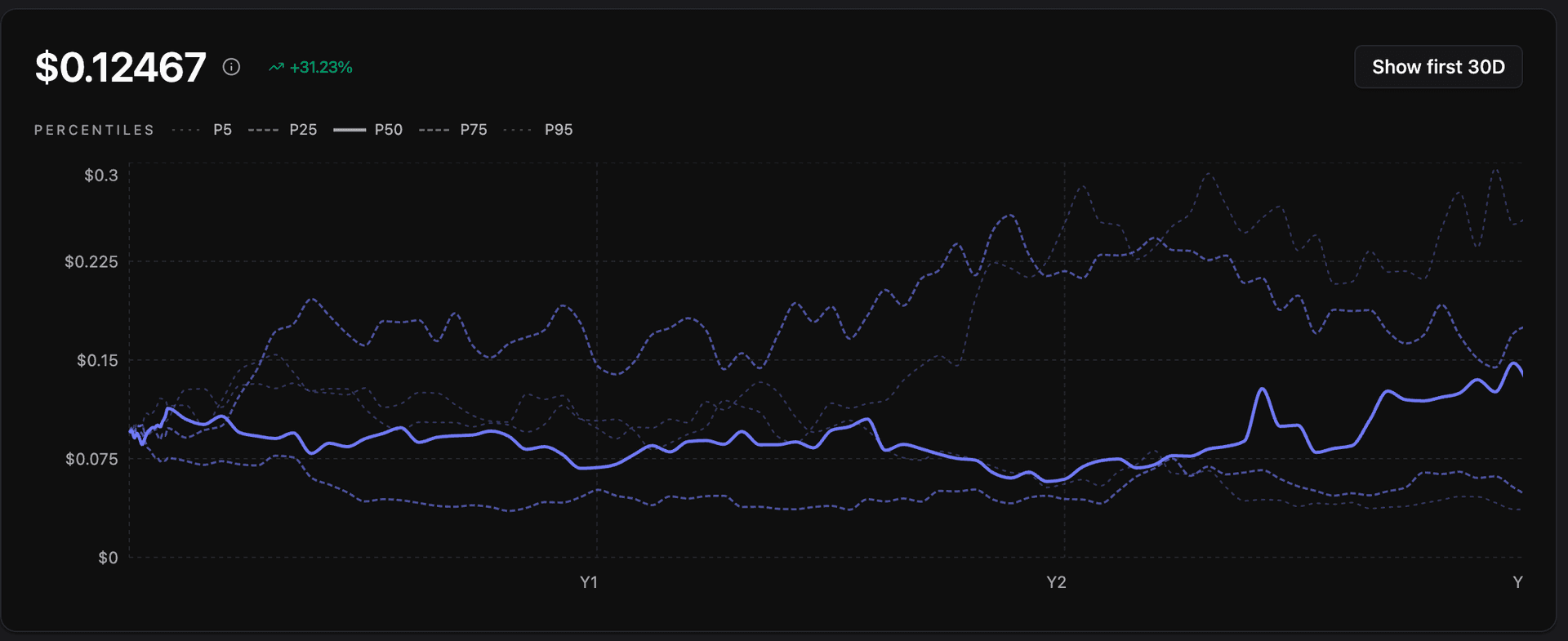
Every token model is replicated inside our high-performance simulation engine and stress tested under liquidity shocks, sell pressure, emission dynamics, and behavioral scenarios. Structural weaknesses are identified before capital reaches the market.
Launch with a proprietary bonding curve engineered for controlled price discovery and capital-efficient liquidity provisioning. Designed to create smooth market formation from day one, the curve aligns incentives, manages volatility, and establishes sustainable liquidity as tokens enter circulation.
Configure British auction-style presales with programmable vesting and reverse lockup mechanics. Once predefined KPIs are met, allocations transition seamlessly into the bonding curve, initiating controlled price discovery and live liquidity formation without structural discontinuities.
Deploy validated token architectures across supported chains in minutes. Contracts are generated deterministically from your configured model, ensuring execution remains aligned with economic design.


Founders and operators use Kenomic to validate tokenomics, identify risk, and make informed launch decisions.
Tokenomics validation is a simulation-driven analysis of a token model that identifies structural weaknesses before launch, including liquidity risk, sell-pressure failure modes, emissions instability, and incentive misalignment. It helps founders, investors, and exchanges quantify token launch risk and avoid common post-launch failures by evaluating scenarios such as unlock events, liquidity shocks, and demand volatility.
Kenomic is built for teams and institutions involved in token launches and token evaluation, including founders and protocol teams designing new tokens, market makers planning liquidity strategies, venture funds screening token investments, and exchanges assessing listing risk. All stakeholders work from the same validated token models and standardized metrics.
Spreadsheets and calculators rely on static assumptions and single-path forecasts. Kenomic uses digital twin–based simulations to evaluate token behavior across thousands of market scenarios, capturing nonlinear effects such as liquidity stress, sell pressure, and emissions interactions that static models cannot represent.
AI-powered tokenomics validation combines scenario-based simulations with diagnostics trained on real token launch patterns to surface common failure modes, particularly around liquidity sufficiency, unlock pressure, and emissions sustainability. While no model can predict markets perfectly, simulation-backed validation provides statistically grounded risk ranges that are materially more robust than spreadsheets or intuition-based approaches.
Tokenomics simulations model economic behavior under defined assumptions and scenarios. While they capture structural risks and probabilistic outcomes, they cannot account for unpredictable external events such as regulatory changes, coordinated market manipulation, or macroeconomic shocks beyond modeled parameters. Kenomic is designed to reduce uncertainty, not eliminate it.
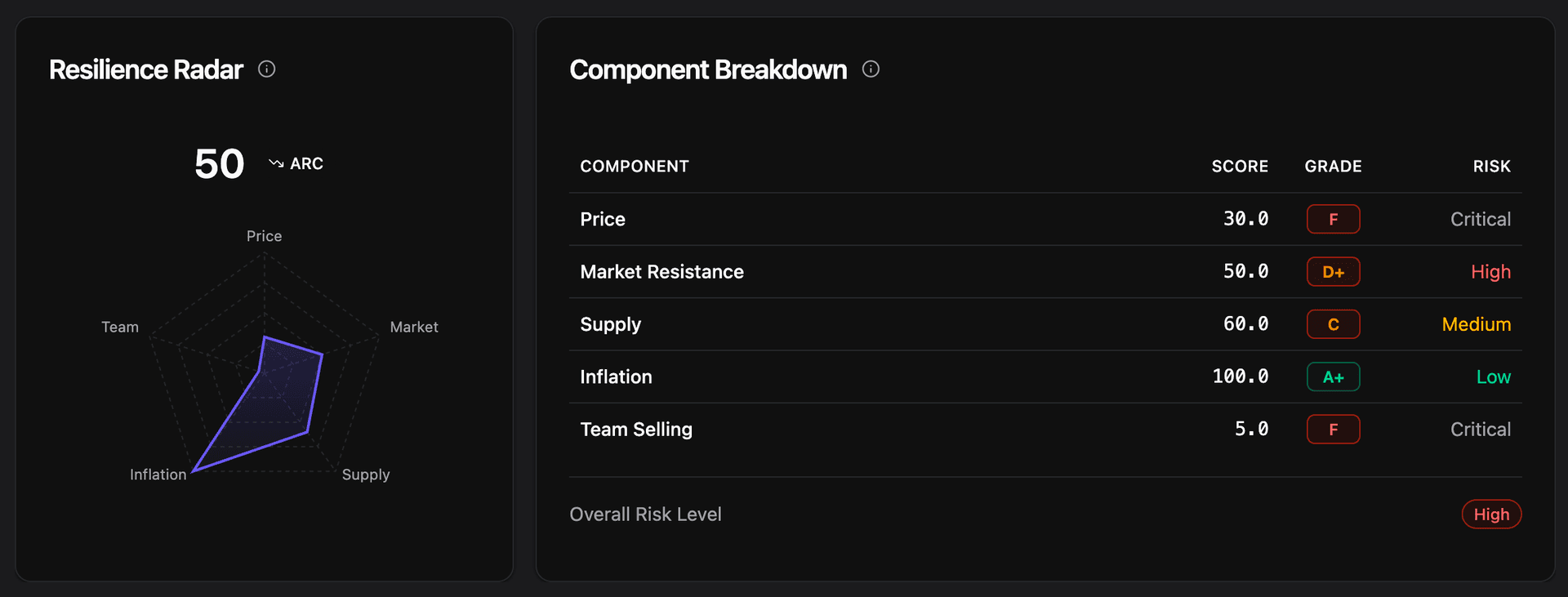
ARC stands for Adaptive Resilience Composite. It is Kenomic's standardized score that measures how resilient a token model is under a range of market conditions, including liquidity stress, sell pressure, emissions schedules, and incentive dynamics. ARC enables objective comparison between token designs using a common quantitative framework.
The Validator is designed for fast, pre-launch tokenomics validation, offering ARC scoring, resilience diagnostics, and scenario analysis for a single token model. The Institutional Suite extends these capabilities with decision-grade modules for market makers, funds, and exchanges, including liquidity provisioning strategy, treasury constraints, and investor outcome modeling: enabling consistent comparison across multiple token assets.
Kenomic supports both new and existing tokens. New token models can be validated to assess structural soundness before launch, while live tokens can be analyzed to understand behavior under changing market conditions. For existing tokens, Kenomic can surface vulnerabilities such as declining liquidity, unsustainable emissions, or treasury misalignment before risks escalate.
Liquidity requirements depend on token supply, emissions schedules, expected sell pressure, and target volatility. Kenomic models these variables to estimate minimum viable liquidity, stress slippage, and sell-side absorption limits, helping teams avoid underfunded launches and excessive price instability.
Yes. Kenomic allows users to run and compare multiple simulations across different parameter sets, token designs, or market assumptions. This enables side-by-side evaluation of trade-offs and supports iterative optimization before finalizing a launch strategy.
Keni is Kenomic's AI agent that guides users through the tokenomics validation process. You can choose between different AI models, and Kenny has been trained using Kenomic's proprietary digital twin software, learning from over 10,000 token designs and simulation outcomes to help surface risks, explain results, and suggest improvements.
You can upload your tokenomics using a CSV file, enter values manually, or use Kenomic's provided templates. CSV support is continuously improving, and while not all formats are currently supported, alternative input methods ensure accurate modeling.
Yes. You can edit parameters directly from your simulation board, adjust assumptions, and re-run simulations as many times as needed, enabling iterative testing and comparison across token configurations.
Standard tokenomics validation reports are generated within minutes of uploading a token model. ARC scoring, simulations, and structural checks run automatically. For Enterprise and Custom plans, additional human-reviewed analysis is available and typically delivered within 24–48 hours.
Yes. Kenomic supports investor and exchange due diligence by providing standardized, simulation-backed assessments of token launch risk. ARC scores and validation outputs enable consistent comparison across token models.
Yes. Kenomic is chain-agnostic and can validate token models deployed on any blockchain. The simulations focus on economic behavior and market dynamics rather than chain-specific execution details.
Yes. Kenomic is expanding from validation into full tokenomics design workflows. Upcoming features will allow users to design token models from scratch, explore parameter spaces, and iteratively optimize designs using the same digital twin framework.
Credits are consumed based on the type of validation and simulation mode you use. Each plan includes a predefined number of credits, and additional credits can be topped up at any time.
Yes. Kenomic supports payments in both crypto and fiat.
Where Tokens Are Built
Kenomic provides the complete infrastructure to design, validate, and launch programmable token economies across any chain. Replace fragmented stacks with a single system built for execution.